Have a safer winter season with our deicing tips. Use our high-performance deicers, including EZ Spread ice melt pellets and our convenient liquid deicer, to keep surfaces safer even in extreme cold conditions.
Snow, ice, and slippery walkways are dangerous for pedestrians. Whether you’re maintaining walkways for your own employees and visitors or managing multiple commercial properties, having the right ice melt and deicing tools make a big difference in preventing slips and falls.
With the right combination of snow removal, deicing products, and smart application techniques, you can keep your walkways clear and safe whatever winter throws at you.
Why Walkway Safety Matters
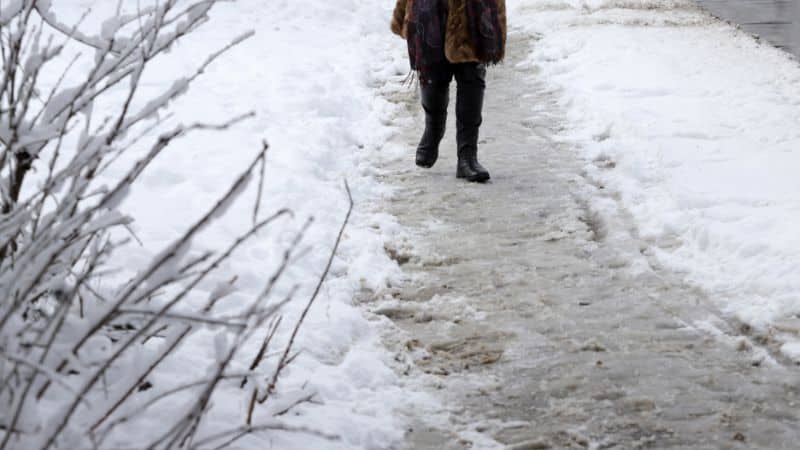
Icy sidewalks, steps, and entrances are major slip-and-fall hazards, especially when snow compacts and refreezes into hard ice. This leaves your business open to risk in the event that someone is injured as well as lost productivity if that person is an employee.
Clearing snow quickly and treating surfaces with effective dicers reduces the risk of injury and your liability. If temperatures fall below 15 degrees F, many basic salts lose effectiveness. That’s why it’s important to work with a partner like Seacole to source the right deicing product.
Seacole’s Tips for Winter Walkway Safety

1. Remove Snow Properly
The best defense against slippery walkways is a good offense. Clear snow early before it compacts with a sturdy shovel or snow blower. This reduces the amount of ice that forms and makes your deicing products more effective.
2, Apply Deicer Strategically
Deicing products work best on thin ice or when applied before snow starts to accumulate. Pre-treating walkways with deicer can prevent ice from bonding to your walkways.
3. Distribute Deicer Evenly
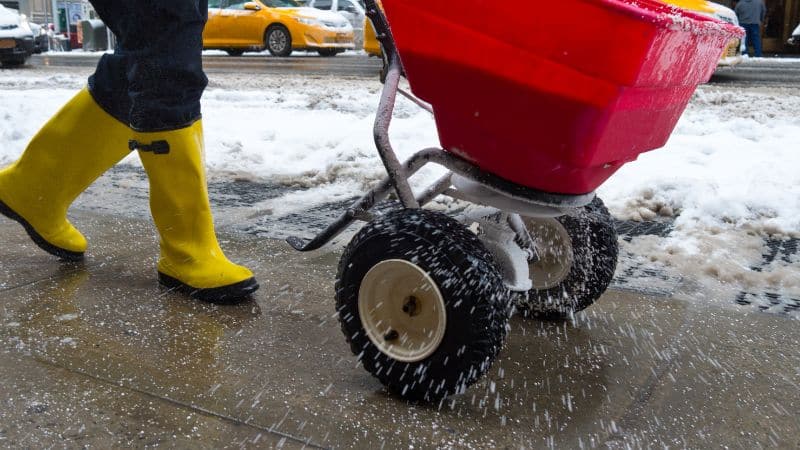
Clumping ice melt isn’t just ineffective. It increases your costs and can harm the environment. For sidewalks and entryways, handheld ice melt spreads help you distribute ice melt evenly. Our EZ Spread Ice Melt product comes in convenient, safety-oriented 10-pound dispensing tubes. They are easy to carry, easy to store, and distribute ice melt evenly.
4. Add Traction As Necessary
If your walkways are very slick, consider adding sand to your ice melt to provide grip. Sand will not melt ice, but it improves safety on slippery surfaces.
5. Watch the Temperature
Some deicing products stop working below a specific temperature. Be sure to choose products that are rated for the conditions you expect. Our ice melt product works to -25 degrees F.
6. Don’t Overtreat
Overtreating your concrete walkways with ice melt will contribute to surface damage if used incorrectly. Be sure to follow your deicer’s directions and avoid over-application. Prompt snow removal and correct dosing should adequately protect your concrete surfaces from damage.
Two Smart Seacole Deicing Products
Seacole offers to reliable deicing products to keep walkways and work areas safe in icy conditions, even in frigid temperatures.
EZ Spread Ice Melt (Calcium Chloride)
Our fast-acting deicing blend is formulated to melt ice down to -25 degrees F, making it ideal for walkways, stairs, and entry points in severe cold. It comes in convenient and easy-to-use 10-pound dispensing bags for easy application.
PA Liquid Deicer (Potassium Acetate)
Would you rather spray than spread? Then give Seacole’s PA Liquid Deicer a try. It is easy to spread with a standard wand sprayer and safe to use near landscaping and grass. It is also your best option for deicing surfaces where ice melt pellets are ineffective, such as vertical surfaces, metal ramps, grated stairways, and outdoor equipment.
Staying ahead of winter hazards is easy with the right strategy and effective deicing products. Partner with Seacole to protect your employees, customers, and other visitors from dangerous slips and falls. Bring us your deicing challenges, and we’ll deliver solutions. Contact us today to place your ice melt order.
Deicing and Walkway Safety FAQs
Why is deicing important for winter walkway safety?
Deicing prevents ice from bonding to walkways and reduces slick surfaces that lead to slips and falls, helping protect pedestrians and limit liability.
When should ice melt be applied for best results?
Ice melt should be applied after snow removal and can also be used as a pre-treatment before storms to stop ice from forming in the first place.
What makes Seacole’s ice melt products effective in extreme cold?
Seacole’s calcium chloride-based and liquid deicers are formulated to work at very low temperatures, continuing to melt ice when traditional salts become ineffective.
Are Seacole deicing products safe for concrete walkways?
Yes, when used as directed. Proper application and avoiding overuse help protect concrete while still providing effective ice control.