Final finishing protects exposed copper on printed circuit boards while creating a surface suitable for reliable component assembly and soldering. Proper surface preparation, micro-etching, flux selection, and control of HASL process conditions help manufacturers achieve consistent final finishes and minimize downstream assembly issues.
The final finish on your printed circuit boards protects the exposed copper while preparing the board for component assembly. Choosing the right final finish chemistries and controlling the process carefully can help you achieve reliable solderability, consistent surface quality, and finished boards that perform as intended in their end applications.
At Seacole, our technical team consults with you to find the chemistries to support your final finishing process, including copper micro etchants, fluxes for hot air solder leveling (HASL), pure tin, and solder bars for the HASL process. Our technical sales team can help you identify the products and process chemistries appropriate for your printed circuit board (PCB) manufacturing requirements.
Why Final Finish Matters
The exposed copper on your boards needs to be protected before moving onto assembly. Without an appropriate surface finish, exposed copper can oxidize and become more difficult to solder reliably.
The final finish protects exposed copper from oxidation and environmental exposure while providing a surface that can support reliable solder connections. The specific finish you select depends on board design, the assembly process, performance requirements, and other factors.
Process control is especially important during final finishing. Chemistry concentration, temperature, application conditions, surface preparation, and equipment performance can all influence the consistency of the finished surface. Controlling these variables minimizes inconsistencies in the final finish so downstream assembly proceeds smoothly.
Preparing the Copper Surface
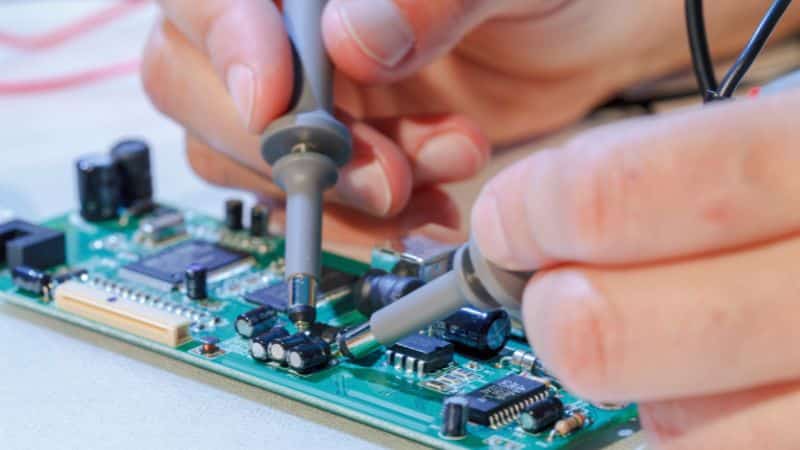
The exposed copper surface of the circuit board must be prepared to receive its final coating. Cleaning and microetching remove surface contamination and oxides to achieve a clean, active copper surface for processing.
Seacole offers several chemistries for preparing the copper surface for final finishing.
- Cu/ETCH ME-45: Highly stable, easy-to-operate copper microetchant for use prior to dry film lamination, oxide coating, electroless plating, or solder leveling. Long bath life. Use in immersion and spray equipment.
- ENVIRO/Etch Make-Up: Provides optimum micro-roughening and cleaning of copper surfaces prior to dry film lamination, oxide treatment, electroless copper deposition, and final finishing. Creates a uniformly clean and micro-roughened copper surface to promote adhesion. Stable, predictable etch rates over a wide range of copper concentrations.
The appropriate micro-etch process will depend on your equipment, copper surface, desired finish, and other process conditions. Consistency is key to avoid over-etching or inadequate surface preparation at this stage in the manufacturing process.
Hot Air Solder Leveling (HASL)
Hot air solder leveling (HASL) applies solder to exposed copper surfaces, then uses hot air to remove excess solder. The remaining solder-coated surface protects the underlying copper and provides a suitable surface for component assembly.
Flux plays an important role in in the HASL process. It is used to prepare the copper surface for solder application and supports the formation of a consistent solder coating. The Seacole technical team may recommend one of these HASL flux chemistries:
- ENVIRO/Flow HAL-30: Low- to medium-viscosity hot air solder leveling flux that assures rapid and complete soldering of PCBs. Removes copper oxides. Low-acid formulation to minimize equipment wear.
- ENVIRO/Flow HAL-54: Designed for use in horizontal hot air leveling. Removes light copper oxides. Solvent-free, non-foaming, good rinsability.
Flux performance, solder composition, temperature, dwell time, and hot-air leveling conditions can all influence the resulting surface. This is why you must control process conditions carefully.
Seacole can help you choose chemistries to optimize the final finishing process, from micro-etchants to flux, pure tin, and solder bars. We work with you to evaluate your process conditions and identify opportunities to improve consistency. Our goal is to help you design a reliable, efficient process that produces high-quality finished boards.
Bring us your printed circuit board manufacturing challenges, and we’ll deliver solutions. Contact us today for expert technical advice on your PCB process.
Final Finish FAQs
What is the purpose of copper micro-etching before final finishing?
Copper micro-etching removes surface oxides and contaminants while lightly roughening the copper surface to create a clean, uniform surface for subsequent finishing. Controlling the etch rate is important to achieve consistent surface preparation without excessive copper removal.
What factors can affect the performance of a HASL process?
HASL performance can be affected by flux chemistry, solder composition, temperature, dwell time, copper surface condition, and hot-air leveling conditions. Controlling these variables helps produce a consistent solder coating and reliable solderability.
How does flux contribute to the HASL process?
Flux removes copper oxides and prepares the exposed copper surface to accept solder. Proper flux selection and application can promote rapid, complete soldering while minimizing issues such as inconsistent solder coverage and excessive equipment wear.
Why is process control important during PCB final finishing?
Variables such as micro-etch rate, chemistry concentration, temperature, processing time, and equipment performance can directly affect the quality and consistency of the final finish. Maintaining these conditions within the appropriate operating ranges helps prevent over-etching, inadequate surface preparation, and inconsistent solder coverage.