Regular rectifier calibration and preventative maintenance help printed circuit board manufacturers maintain accurate electrical output, reliable electroplating performance, and consistent process results. Inspecting equipment, validating voltage and current readings, documenting calibration, and planning upgrades or repairs can also help reduce unexpected downtime and support regulatory requirements.
When consistency and quality are paramount, it is important that you optimize every step in your printed circuit board manufacturing process. This includes regular maintenance and calibration of your electroplating rectifiers and other heavy equipment.
Seacole partners with American CRS Equipment, a leader in industrial power supplies for electroplating and other finishing processes, to provide preventative maintenance and calibration of our customers’ rectifiers. Here’s a look at what rectifier calibration is and how it improves your printed circuit board manufacturing process.
Operator Panel Calibration
One important factor in the performance and reliability of your electroplating process is the calibration of your rectifier. It all starts with the operator panel. During the recalibration service, your technician will complete several checks and adjustments to keep your rectifier running optimally. This may include:
- Comparing rectifier voltage and current outputs to remote or gauge displays.
- Adjusting remote or gauge displays within tolerance of the manufacturer’s limits.
- Replace gauges or circuitry if calibration is not within acceptable limits.
- Make repairs on site to bring unit performance back into acceptable calibration limits.
- Document the outputs and corresponding readings as found or before and after adjustment in a calibration certificate.
- Validate calibration and provide calibration certificates.
During the calibration process, your technician will complete a de-energized checklist that includes thorough physical equipment checks, hardware inspection, electrical connection checks, and component testing. Once calibration is complete, your technician will affix a calibration sticker to the unit to verify work has been completed. They will also take a picture of the sticker for your records in the case of an audit.
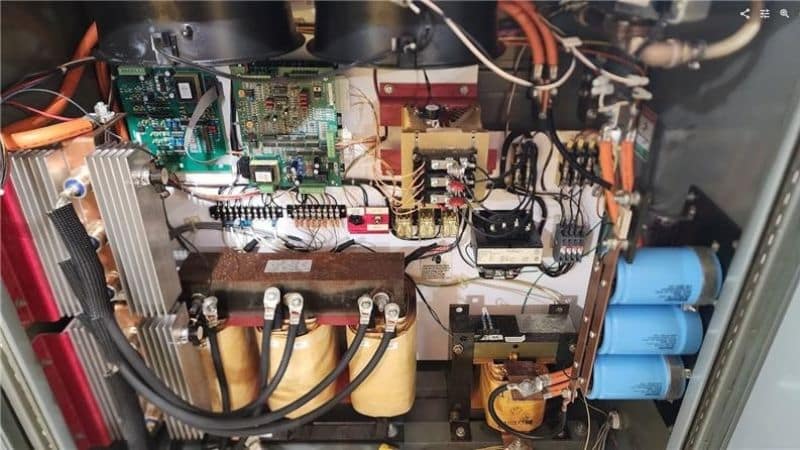
Rectifier Upgrades, Refurbishment, and Replacement
During the calibration process, your technician may identify components that may be reaching the end of their useable life. In this case, the technician can discuss opportunities for upgrades, refurbishments, or replacement with you.
Planning ahead can help you with your long-term budgeting and blanket ordering. You can also take advantage of discounts on refurbishments and control upgrades. With your technician, you will develop process requirements, as well as a plan for infrastructure interfacing and incorporating available new technologies for cooling, power distribution, and other processes. You will also finalize a timeline for upgrade work.
Rectifier Calibration Certificates
If you need to adhere to MIL-SPEC, NADCAP, or other regulations, you may require a calibration certificate for your rectifier that certifies it is working within specified limits. We can provide appropriate documentation for your records. We ask that you verify the certification we provide to you fulfills the requirements of your governing bodies.
Partner with Seacole and American CRS Equipment
Through American CRS Equipment, Seacole provides rectifier calibration as a stand-alone service or included with your preventative maintenance program. American CRS is an industry leader in rectifier design and service. Their experienced, reliable team is the best choice for your rectifier maintenance and repair needs, just as the Seacole team is for your printed circuit board chemistry needs. Our partnership with American CRS means you can take care of all of your printed circuit board chemistry and equipment servicing needs with a single call or email.
Bring us your printed circuit board manufacturing challenges, and we’ll deliver solutions, from chemistries to rectifier calibration. Contact us today for expert technical advice on your PCB process.
Rectifier Calibration FAQs
What is checked during electroplating rectifier calibration?
Calibration can include comparing rectifier voltage and current output against remote or gauge displays, adjusting displays to manufacturer tolerances, inspecting electrical connections and hardware, and testing components. Technicians document readings before and after adjustments and provide calibration certification when applicable.
Why is accurate rectifier voltage and current output important for electroplating?
Voltage and current directly influence the electrical conditions used during electroplating. Inaccurate readings or output can contribute to process variation, making accurate calibration important for maintaining consistent plating conditions and finished-part quality.
How often should an electroplating rectifier be calibrated?
Calibration frequency depends on the equipment, operating environment, process requirements, manufacturer recommendations, and applicable quality or regulatory standards. Manufacturers should establish a calibration schedule appropriate for their process and verify that it meets any applicable customer or governing-body requirements.
What should you do if rectifier calibration reveals worn or outdated components?
Calibration provides an opportunity to identify components approaching the end of their usable life. Depending on the equipment and process requirements, manufacturers can plan repairs, refurbishment, control upgrades, or complete replacement rather than waiting for an unexpected equipment failure.